Geometry
Defines positions, proportions and spatial relationships.

Form and the movement needed to produce it are developed together.
Research by Ludson Zampirolli into the relationship between geometry, algorithms, machine movement and material.
From digital studies to physical testing, each stage brings design intent closer to fabrication conditions.
Explore the research ↓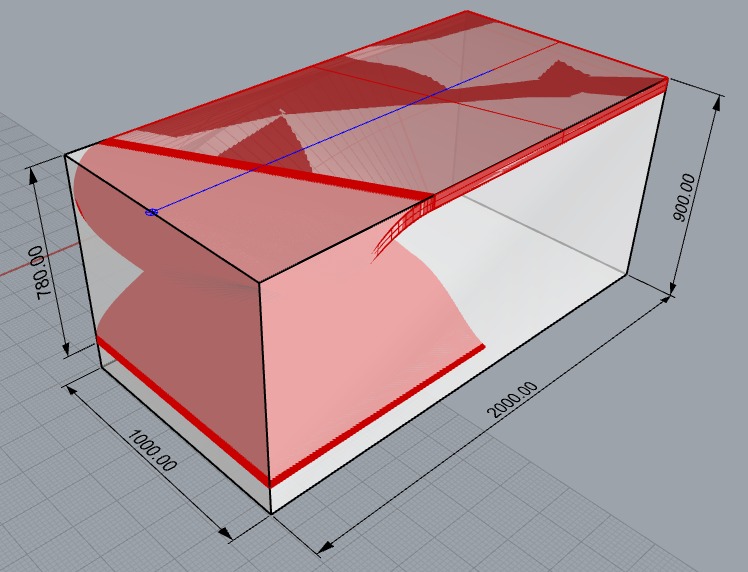
Design by Movement grows out of investigating fabrication movement as part of design.
In Z-Motion, geometry is not considered in isolation: it develops in relation to the toolpaths and movements a machine configuration can perform.
This relationship informs an approach to design and fabrication whose outcome also depends on the material, tool and process.
Geometry ↔ movement ↔ material
Form and movement strategy are investigated together.
Defines positions, proportions and spatial relationships.
Organizes these relationships into data.
Connects the data with the fabrication path.
Performs movements within the limits of its architecture and controller.
Responds to the tool and the conditions of the process.
Generating commands is one stage of this relationship. The result requires compatibility between design, control, tooling, calibration and material.
Foam prototypes make it possible to investigate form, surface continuity and their relationship with fabrication movement.
These are development tests. Each record corresponds to a prototype and the conditions in which it was produced.
Behavior in stone—cutting forces, finish, speed and cutting strategy—requires its own tests.
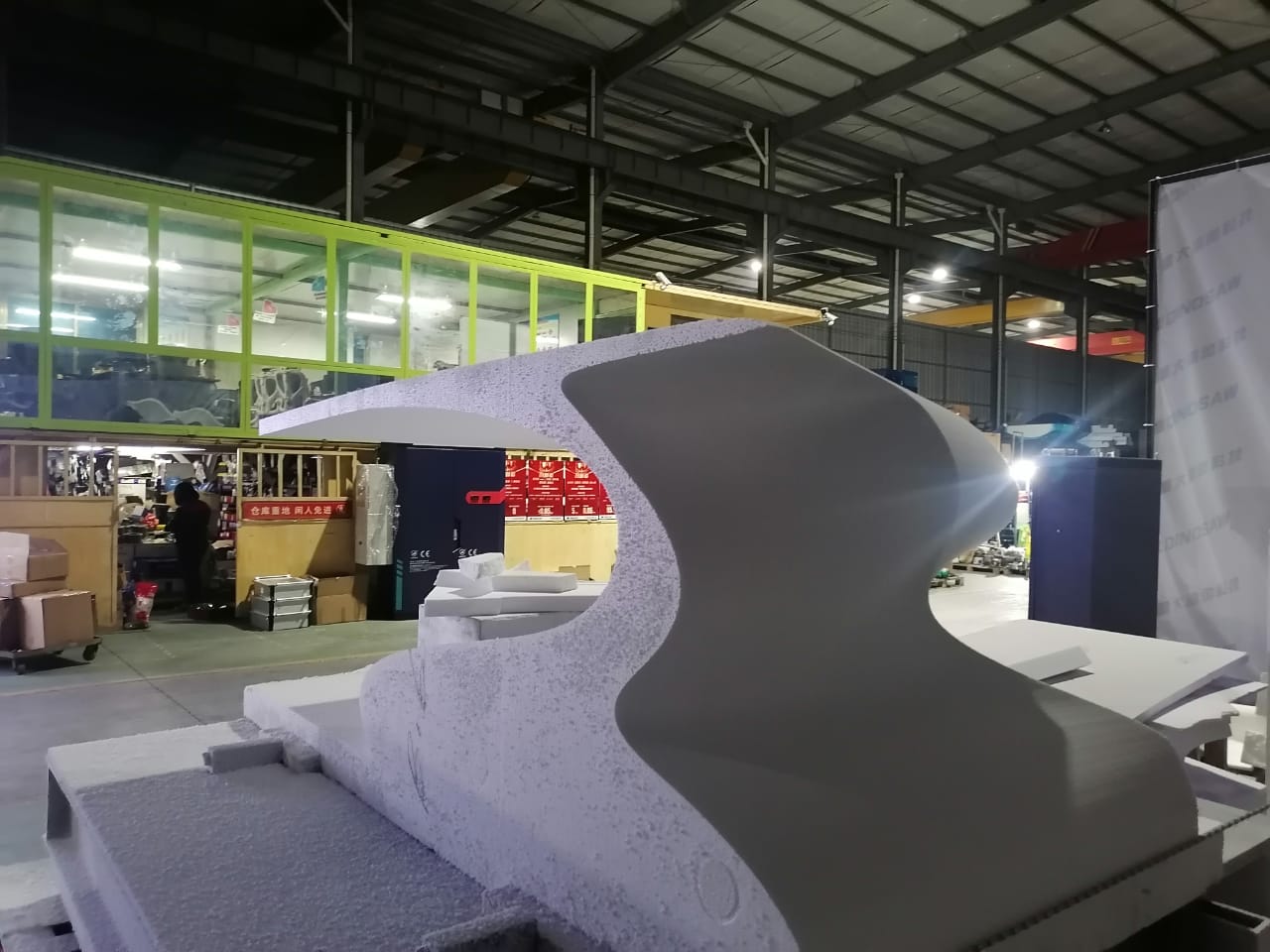
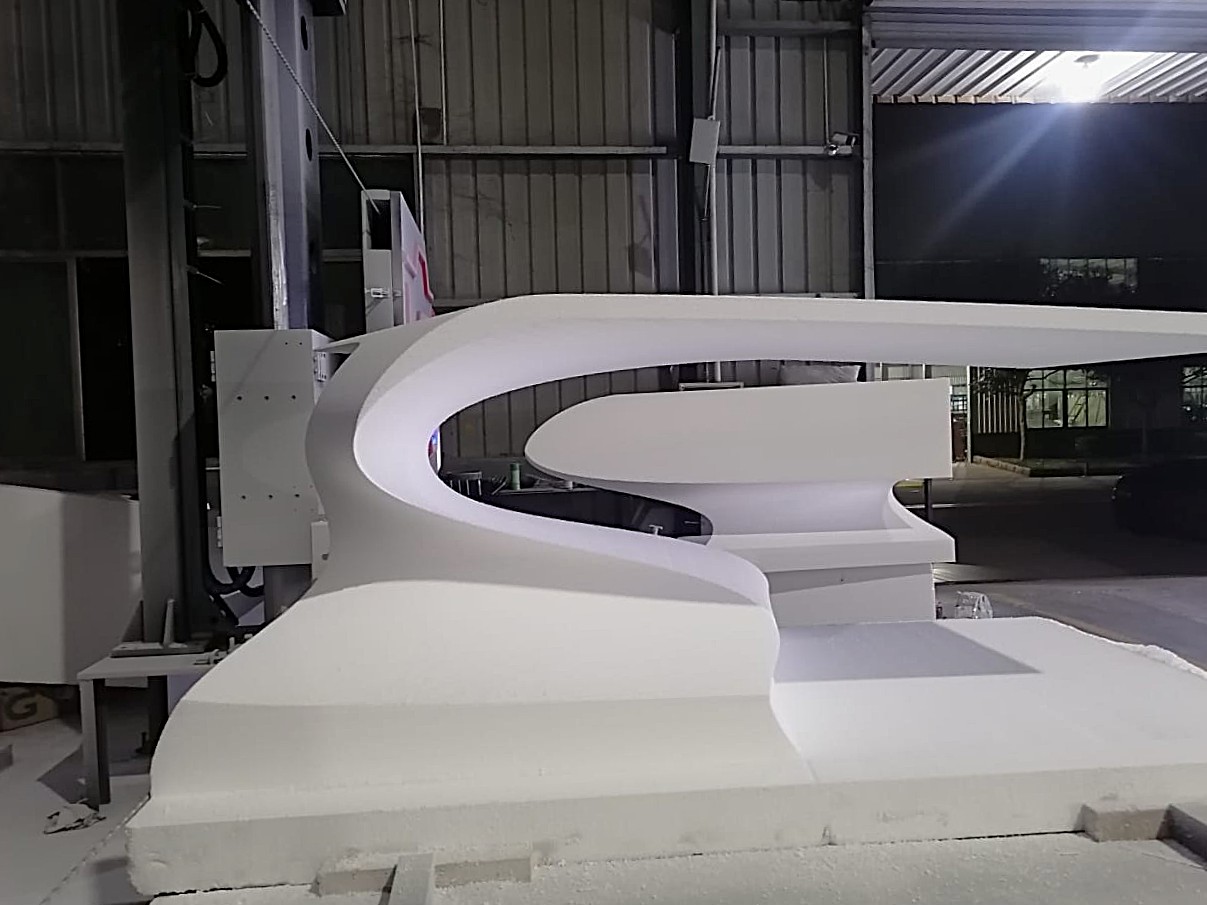
A digital study organizes a hypothesis. Physical testing makes it possible to observe how that hypothesis takes shape in material.
Comparing the intended form with the result helps identify adjustments to geometry, toolpaths and process. The comparison must take the conditions of each experiment into account.
Digital study → physical test → observation → further development
Applying the approach to natural stone requires connecting geometry, material, tool, workholding and fabrication strategy.
Furniture, architectural components, sculptural elements and special products are application directions under investigation.
Geometry demonstrated in foam does not prove cutting behavior in stone. Each material, machine, controller, wire, speed and dimension requires its own analysis.
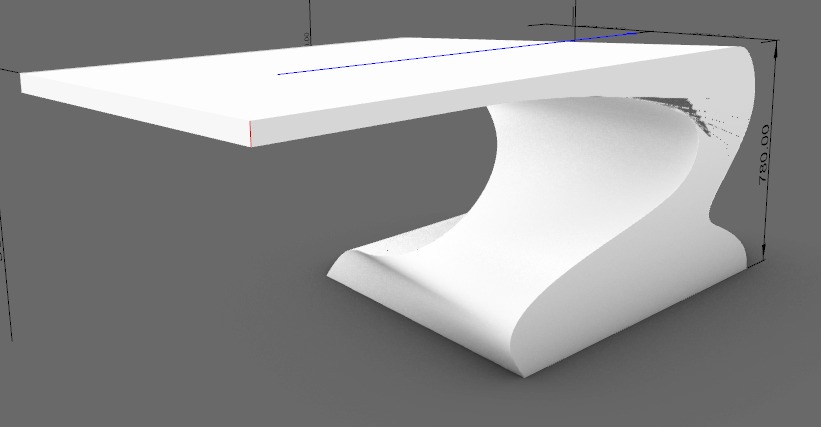
Current development considers CNC monowire configurations and the possibility of coordinating movements during cutting.
Toolpaths, positions and rotations must respect axes, travel, origin, calibration and controller capabilities. Available interpolation and command generation must be checked for each configuration.
Z-Motion does not assume universal compatibility across machines.
What form do you want to produce? What movement could create it? What constraints do the material and machine impose?
New geometries, algorithms and strategies remain under investigation. Architects, designers, computational design specialists and fabrication teams can contribute real design challenges.
Moving toward a production application depends on specific tests and the conditions of each collaboration.
One direction of development is to bring computational geometry and digital fabrication into industrial operations and, in the future, quarries.
Investigating fewer stages, transformation closer to the source and new ways of working stone may open possibilities for components, preforms and products.
This is a research vision. Its feasibility and effects depend on the process, infrastructure and organization of production.
Design → data → transformation → component → application
Share the design intent, material, dimensions and available fabrication conditions.
The conversation starts with that context and the tests needed to develop an application.
Discuss Z-Motion →Research and design approach: Ludson Zampirolli / Z-IDEA. Design by Movement is the authorial name retained in this presentation.